Bangladesh faces some of the most challenging building climate conditions in South Asia. Summer temperatures regularly reach 35 to 40 degrees Celsius, humidity levels stay above 80 percent for months, and the monsoon season brings heavy rainfall that tests every building envelope. At the same time, energy costs are rising and building owners are looking for ways to reduce operating expenses. Building insulation is no longer optional. It is a practical necessity for anyone constructing or renovating a building in this climate.
This guide covers the insulation requirements specific to Bangladesh, the types of insulation available in the local market, typical price ranges, energy savings potential, and the building code requirements that apply to insulation in commercial and industrial construction.
Bangladesh Climate and Insulation Requirements
Understanding why insulation matters in Bangladesh starts with the climate data. The country sits in a tropical monsoon climate zone, which means three distinct challenges for building envelopes:
Extreme heat. Average summer temperatures in Dhaka range from 33 to 36 degrees Celsius, with peak temperatures occasionally exceeding 40 degrees. Solar radiation adds significant heat gain through roofs and walls. An uninsulated metal roof can reach surface temperatures of 65 to 70 degrees Celsius on a sunny day, transferring enormous amounts of heat into the building below.
High humidity. Relative humidity in Bangladesh regularly exceeds 80 percent during the monsoon season and stays above 60 percent even in the dry season. High humidity increases the perceived temperature and puts additional load on air conditioning systems that must both cool and dehumidify the air.
Monsoon rainfall. Annual rainfall in Dhaka averages 2,000 to 2,500 millimeters, with the heaviest months being June through September. Insulation materials must resist water absorption and maintain their performance even when exposed to moisture.
These conditions mean that effective insulation in Bangladesh must provide three things: thermal resistance to reduce heat gain, moisture resistance to maintain performance in humid conditions, and durability to withstand the demanding climate over the life of the building.
Available Insulation Types in Bangladesh
Several insulation materials are available in the Bangladesh market, each with different characteristics and price points:
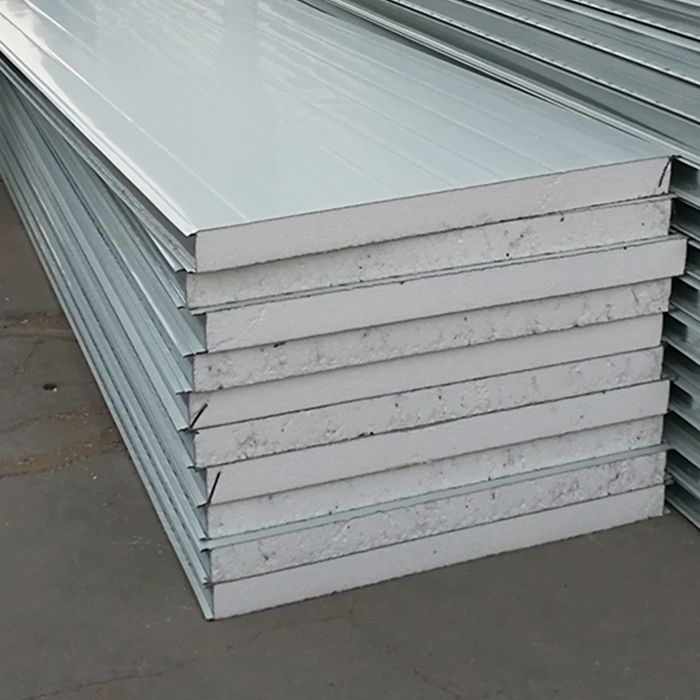
EPS (Expanded Polystyrene) is the most widely available and affordable option. It is manufactured locally by several producers and comes in densities from 12 to 30 kg per cubic meter. EPS offers good thermal performance, excellent moisture resistance, and easy installation. It is the most popular choice for Sandwich Panel cores and standalone insulation applications.
PU/PUF (Polyurethane Foam) provides the best thermal performance per unit thickness. With a thermal conductivity of 0.022 W/mK compared to EPS at 0.035 W/mK, PU panel can be thinner while providing the same insulation value. PU is the standard choice for cold storage and applications where space is limited. It costs 30 to 40 percent more than EPS.
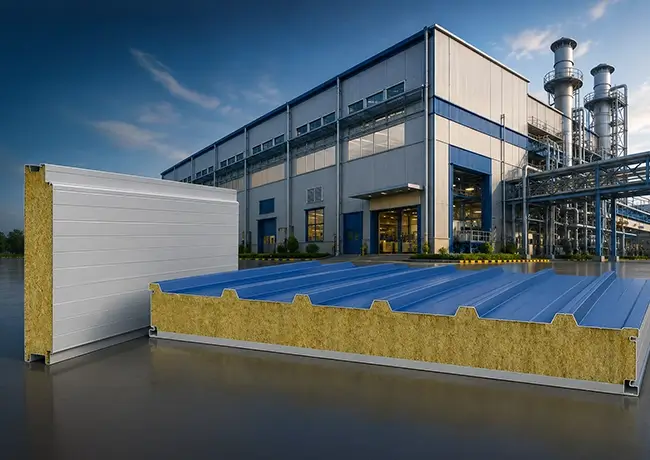
Rockwool (Mineral Wool) is made from basalt rock and provides excellent fire resistance and acoustic insulation. Rockwool is classified as non-combustible and can withstand temperatures above 1000 degrees Celsius. It is the preferred choice for buildings with strict fire safety requirements. Rockwool costs more than EPS but less than PU.
Fiberglass is available in Bangladesh but less commonly used for commercial applications. It requires careful installation to maintain performance and is susceptible to moisture absorption in Bangladesh's humid climate. Most commercial projects in Bangladesh have moved toward Sandwich Panel systems that integrate insulation with structural and weather protection functions.
Local Manufacturers and Supply
Bangladesh has a growing number of insulation manufacturers and Sandwich Panel producers. The local manufacturing capacity means that prices are more competitive than imported alternatives, and lead times are shorter.
EPS is produced by multiple manufacturers across the country, with production facilities in Dhaka, Chittagong, and other industrial areas. The availability of local raw materials, primarily polystyrene beads, supports a healthy supply chain.
Sandwich Panel manufacturing has expanded significantly in recent years. Local producers now manufacture EPS, PU, and Rockwool Sandwich Panel to international standards, with continuous production lines that ensure consistent quality. This local manufacturing capacity means building owners do not need to rely on expensive imports.
RPS Construction operates its own manufacturing facility in Bangladesh, producing EPS Sandwich Panel with consistent density and quality control. Our factory direct model means we can offer competitive pricing while maintaining strict quality standards.
Price Ranges and Cost Factors
Insulation costs in Bangladesh vary based on material type, thickness, and quantity. Here are typical price ranges for common insulation products:
| Material | Thickness | Approximate Price (BDT per sqm) |
|---|---|---|
| EPS Sandwich Panel | 50mm | 450 to 600 |
| EPS Sandwich Panel | 100mm | 700 to 950 |
| PU Sandwich Panel | 50mm | 700 to 900 |
| PU Sandwich Panel | 100mm | 1100 to 1400 |
| Rockwool Sandwich Panel | 50mm | 650 to 850 |
| Rockwool Sandwich Panel | 100mm | 1000 to 1300 |
| Rockwool rolls | 50mm | 200 to 350 |
| Rockwool rigid slabs | 50mm | 300 to 500 |
These prices are approximate and depend on order quantity, delivery location, and current market conditions. Larger orders typically receive better pricing. Always request quotes from multiple suppliers to compare both price and quality.
Energy Savings Potential
The financial case for insulation in Bangladesh is compelling. Energy costs have been rising steadily, and air conditioning represents 50 to 60 percent of total electricity consumption in commercial buildings. Proper insulation can reduce cooling energy consumption by 25 to 40 percent.
Here is a practical example. A 2,000 square meter commercial building in Dhaka without roof or wall insulation might spend approximately 2.4 million taka per year on electricity for cooling. Adding 100mm EPS insulation to the roof and 50mm EPS insulation to the walls could reduce that cost to roughly 1.5 million taka per year, saving about 900,000 taka annually.
The insulation investment for this building would typically range from 800,000 to 1.2 million taka depending on panel specifications and installation details. At annual savings of 900,000 taka, the insulation pays for itself within 12 to 16 months. Over a 20 year building life, the cumulative savings would exceed 18 million taka.
Payback Periods by Building Type
Different building types see different payback periods based on their operating patterns and energy costs:
Warehouses and factories. These buildings typically operate during daytime hours and have moderate cooling requirements. Payback periods for insulation are usually 18 to 24 months.
Offices. Office buildings often run air conditioning for 10 to 12 hours per day and have higher cooling loads due to equipment and lighting heat. Payback periods are typically 12 to 18 months.
Retail spaces. Retail buildings often operate 12 to 16 hours per day with high occupancy loads. The combination of long operating hours and high occupancy makes insulation particularly cost effective, with payback periods of 10 to 15 months.
Cold storage. Cold storage facilities have the highest energy costs and therefore the fastest payback. Insulation for cold rooms typically pays for itself within 6 to 12 months.
Building Code Requirements
Bangladesh's building code includes requirements for thermal insulation in commercial and industrial buildings. While enforcement varies, understanding the requirements helps ensure your building meets minimum standards and qualifies for any available incentives or certifications.
The Bangladesh National Building Code (BNBC) specifies minimum thermal resistance values for building envelopes based on climate zone and building type. For commercial buildings in the Dhaka region, the code generally requires a minimum thermal resistance of 1.5 to 2.0 m2K per watt for walls and 2.0 to 3.0 m2K per watt for roofs.
Fire safety requirements are also important. The code classifies buildings by occupancy type and height, with specific requirements for fire resistance of wall and roof assemblies. Buildings above certain heights or with specific occupancies may require non-combustible insulation materials like Rockwool.
For cold storage and food processing facilities, additional requirements may apply for vapor barriers, insulation continuity, and thermal performance to maintain food safety standards.
Installation Best Practices for Bangladesh
Getting the insulation material right is only part of the equation. Proper installation is essential for achieving the performance you are paying for:
Vapor barriers. In Bangladesh's humid climate, vapor barriers on the warm side of the insulation are critical. Without them, warm moist air can migrate into the insulation layer, condense, and degrade performance over time.
Joint sealing. Insulation panel must be properly sealed at joints to prevent air leakage and moisture intrusion. Even small gaps can significantly reduce the effective insulation value of the system.
Thermal bridging. Metal fasteners, structural members, and other conductive elements can create thermal bridges that bypass the insulation. Good design details minimize these bridges, and thermal break materials can be used where bridges cannot be avoided.
Moisture management. Roofs should include proper drainage and ventilation to prevent water accumulation. Walls should include weep openings and drainage paths to allow any moisture that enters the system to escape.
Getting Started
Whether you are planning a new building or retrofitting an existing one, insulation is one of the most cost effective investments you can make. The key is selecting the right insulation type, thickness, and installation method for your specific building and budget.
For most commercial and industrial buildings in Bangladesh, EPS Sandwich Panel offer the best balance of performance, cost, and ease of installation. For applications requiring better thermal performance in thinner profiles, PU panel are worth the premium. And for buildings with strict fire safety requirements, Rockwool panel provide the necessary fire resistance.
At RPS Construction, we manufacture and install all three types of Sandwich Panel in Bangladesh. Our team can help you evaluate your building's insulation needs, recommend the right specifications, and manage the installation process. Contact us for a free consultation and quote.