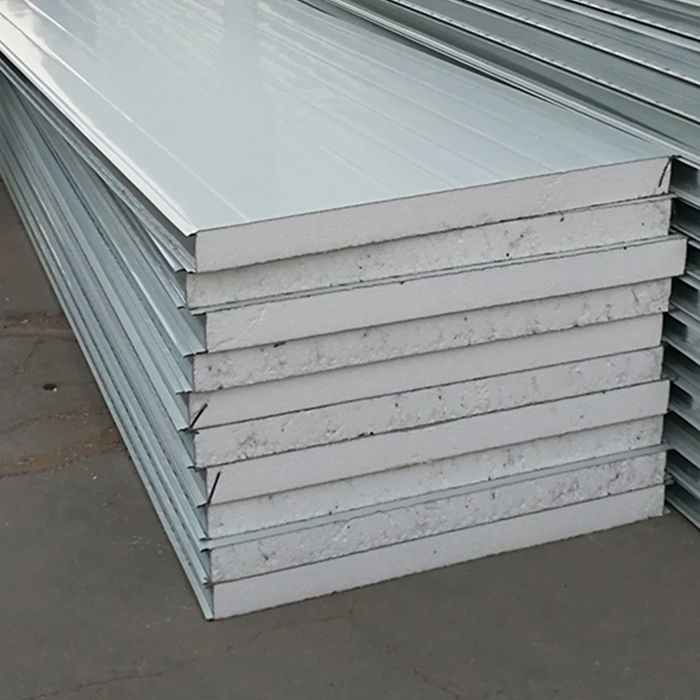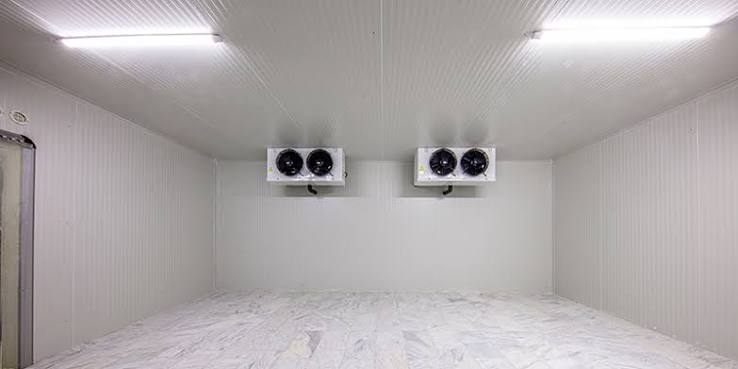
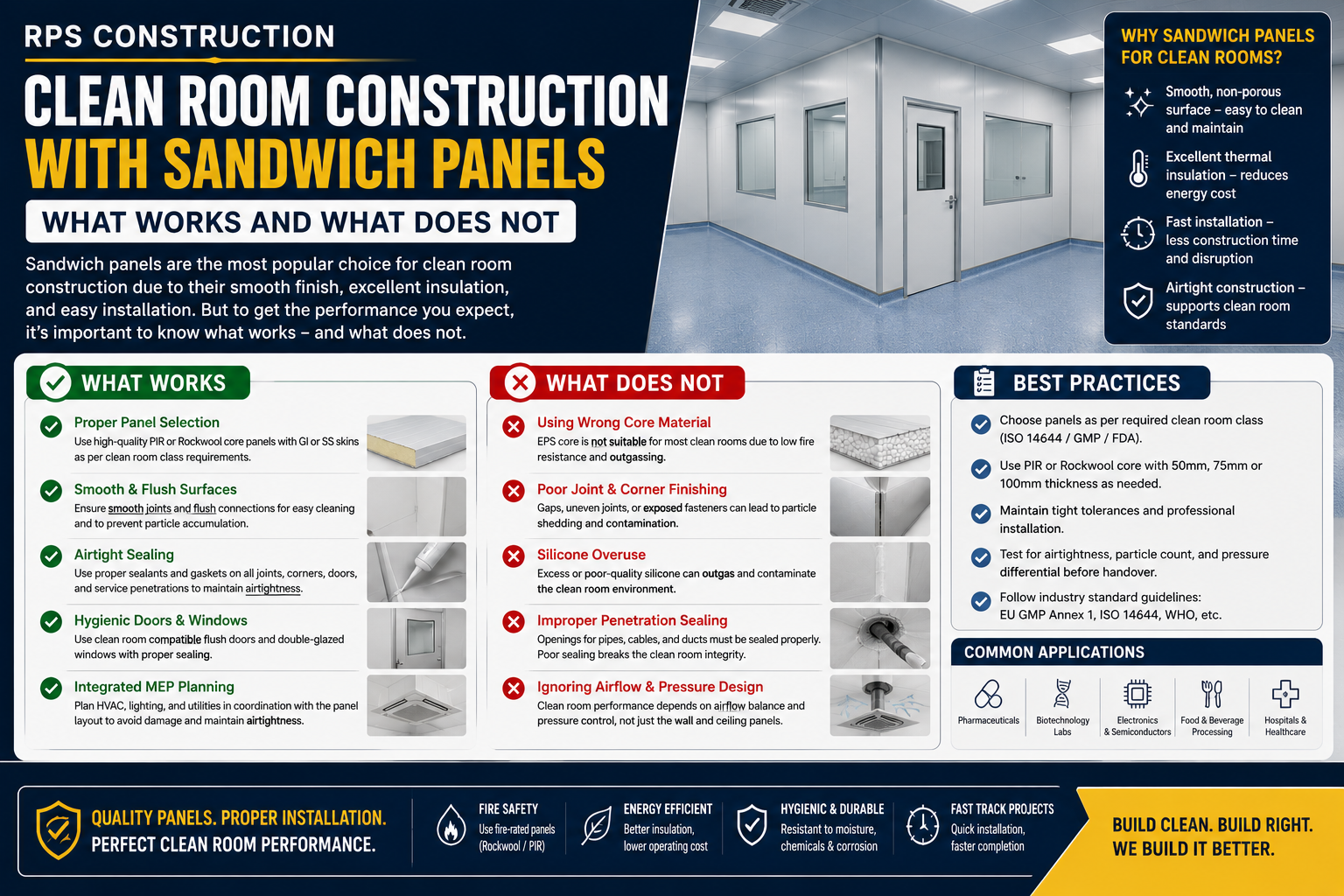
Building a clean room is not like building a regular warehouse. Every surface, every joint, every material choice affects whether your clean room will pass inspection or fail. Sandwich Panel have become the standard wall and ceiling material for clean rooms, but not all panel work equally well. Some panel types and finishes are perfectly suited for controlled environments. Others will cause you headaches during validation and ongoing operations.
In this guide, we will break down what actually works when building clean rooms with Sandwich Panel. We will cover the panel types, surface finishes, and design considerations that make the difference between a clean room that performs and one that does not.
What Clean Rooms Actually Require
Before we talk about panel, it helps to understand what a clean room needs from its walls and ceiling. There are three non-negotiable requirements:
Temperature control. Most clean rooms operate within tight temperature ranges, often plus or minus 0.5 degrees Celsius. The wall and ceiling panel must provide consistent thermal insulation without cold spots or thermal bridges that create temperature variations.
Dust-free surfaces. Clean rooms are classified by how many particles are allowed per cubic meter of air. The walls and ceilings must be smooth, non-porous, and easy to clean without shedding fibers or particles. Rough or textured surfaces trap particles and make it nearly impossible to meet cleanliness standards.
Humidity control. Many pharmaceutical and electronics clean rooms require specific humidity levels. Panel materials must not absorb or release moisture, which would make humidity control unpredictable. Moisture absorption also creates conditions for mold growth inside the wall assembly.
Which Panel Types Work for Clean Rooms
Not every Sandwich Panel is suitable for clean room applications. Here is how the main types stack up:
PU Panel The Preferred Choice
Polyurethane foam panel are the most commonly used option for clean rooms, and for good reason. The closed-cell structure of PU foam does not absorb moisture, which means it will not harbor bacteria or affect humidity control. PU also provides the best thermal performance per millimeter of thickness, which matters when clean room wall cavity depth is limited.
For most pharmaceutical and electronics clean rooms, PU panel in the ISO 5 to ISO 8 range are the standard choice. They provide reliable thermal insulation, consistent density, and the closed-cell core does not degrade over time in controlled environments.
Rockwool for Fire Rated Requirements
Some clean rooms, especially those in larger facilities or multi-story buildings, have fire separation requirements that foam cores cannot meet. Rockwool panel are non-combustible and can serve as fire barriers between clean room zones. The trade-off is that Rockwool is more porous than PU, so it needs proper facing and sealing to prevent particle shedding and moisture absorption.
In practice, many clean room projects use a combination. PU panel for the main walls and ceiling where thermal performance matters most, and Rockwool panel at fire-rated partition walls and ceilings where building codes require non-combustible construction.
EPS Panel Generally Not Recommended
EPS panel are not a good fit for clean rooms. The material is more porous than PU, absorbs more moisture, and the bead structure can shed particles if the surface is damaged. EPS also has lower thermal performance, which means thicker panel to achieve the same insulation values. For controlled environments where hygiene and consistency matter, EPS is not the right tool for the job.
Surface Finishes That Matter
The panel core provides insulation, but the surface facing is what the clean room environment actually interacts with. The facing material determines cleanability, chemical resistance, and particle generation. Here are the main options:
Pre-painted galvanized steel (PCGI): The most common and most affordable option. PCGI facings work well for ISO 7 and ISO 8 clean rooms where the cleaning protocols are moderate. The paint finish is smooth enough for regular cleaning, and galvanized steel provides corrosion resistance. The limitation is that PCGI can scratch, and scratches create hiding places for particles.
Stainless steel: The gold standard for pharmaceutical and food-grade clean rooms. Stainless steel is chemically inert, scratches less easily than painted steel, and can withstand aggressive cleaning agents. It is the preferred facing for ISO 5 and ISO 6 environments where cleaning protocols are frequent and use strong chemicals. The cost is higher, but for critical environments the investment pays off in reduced contamination risk.
Aluminum: Lightweight and corrosion resistant, aluminum facings work in clean rooms where weight is a concern, such as suspended ceiling systems. Aluminum does not rust and can be anodized for additional chemical resistance. It is softer than steel though, so it is more prone to denting during installation.
ISO Classifications and Panel Selection
Clean rooms are classified by the International Organization for Standardization under ISO 14644. The classification determines how strict the particle count limits are, and that directly affects what panel and facing combinations you need:
ISO 8 (Class 100,000): The least stringent clean room classification. PCGI faced PU panel work perfectly well here. Regular warehouse and processing environments that need basic contamination control fall into this category.
ISO 7 (Class 10,000): A step up in cleanliness. PCGI is still acceptable but stainless steel becomes the better choice for areas with frequent cleaning. Panel joints and seals become more important at this level.
ISO 6 (Class 1,000): Now you are in pharmaceutical and electronics territory. Stainless steel facings are strongly preferred. Panel joints must be sealed with clean room grade sealant, and all penetrations for pipes, ducts, and electrical must be detailed to prevent particle leakage.
ISO 5 (Class 100) and below: These are critical environments like semiconductor fabrication and aseptic pharmaceutical filling. Stainless steel is mandatory. Panel must be manufactured in controlled conditions and handled carefully during installation to avoid contamination before the room even opens.
What Does Not Work
Knowing what to avoid is just as important as knowing what to use. Here are the common mistakes we see in clean room construction:
Using standard panel without sealed joints. Even the best panel is useless for clean room purposes if the joints between panel are not properly sealed. Unsealed joints allow particles to migrate between the clean room and the wall cavity, defeating the entire purpose of the controlled environment.
Choosing panel based on price alone. The cheapest panel option almost always costs more in the long run. Poor thermal performance increases energy bills. Surface damage leads to contamination. Inadequate fire resistance creates liability. The panel cost is a small fraction of the total clean room build, so saving a few dollars per square meter on panel is a false economy.
Ignoring thermal bridging at structural connections. If the Sandwich Panel connect to the building structure through conductive metal fasteners without thermal breaks, you get cold spots at every connection point. These cold spots cause condensation, which creates mold risk and contaminates the clean room environment.
Using textured or profiled facings. Some panel facings have ribbed or textured profiles for aesthetic reasons. In a clean room, these textures trap particles and make cleaning nearly impossible. Clean room panel need flat, smooth surfaces.
Design Details That Make or Break a Clean Room
The panel themselves are only part of the equation. How they are installed and detailed determines whether the clean room performs as designed:
Corner details. Internal corners in clean rooms should be coved rather than square. Coved corners eliminate the sharp angle where particles accumulate and cleaning tools cannot reach effectively. This means installing coved angle trim at every wall to wall and wall to ceiling junction.
Penetration sealing. Every pipe, duct, cable tray, and electrical conduit that passes through a clean room wall creates a potential contamination path. Each penetration must be sealed with compatible sealant that maintains the integrity of the air barrier.
Door and window frames. Frames must be flush with the wall surface or recessed in a way that does not create ledges. Protruding frames collect particles and disrupt airflow patterns within the room.
Getting Started
Building a clean room is a specialized task that demands the right materials and the right installation team. The panel selection, facing material, joint detailing, and surface finishes all need to work together to achieve the target ISO classification.
At RPS Construction, we manufacture PU and Rockwool Sandwich Panel in Bangladesh with surface finishes suitable for clean room applications. Our team understands the specific requirements of pharmaceutical, medical, and electronics clean rooms and can help you select the right combination for your classification target.
Contact us to discuss your clean room project and get panel recommendations based on your specific ISO requirements.