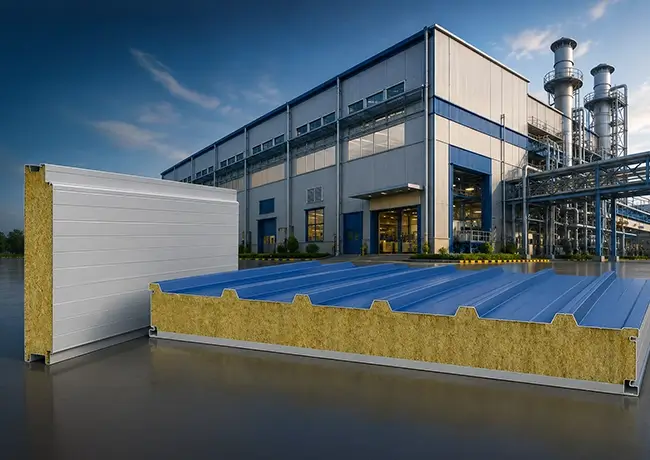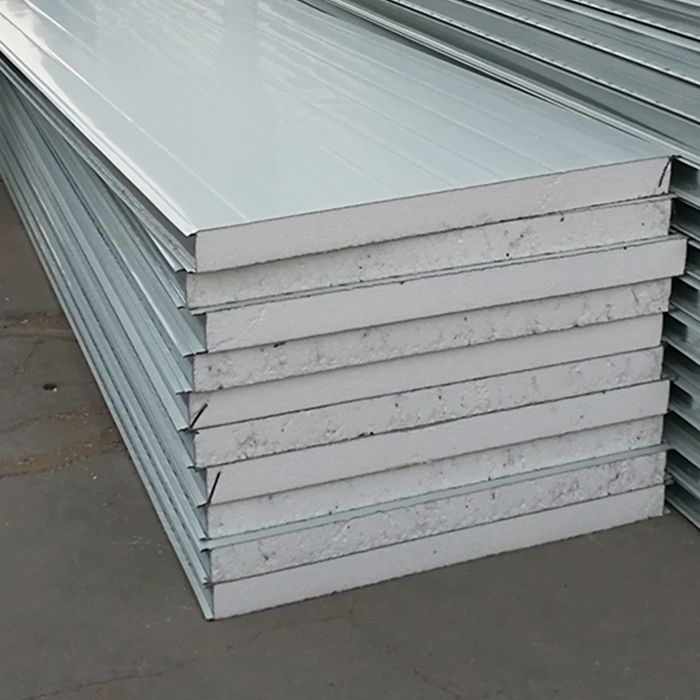
Commercial construction in Bangladesh is moving faster than ever. Offices, retail centers, hotels, and mixed-use developments are going up across Dhaka, Chittagong, and other cities, and developers are looking for building systems that deliver speed, quality, and long term value. Sandwich Panel have emerged as a practical solution for many of these projects, offering a combination of performance and efficiency that traditional construction methods cannot easily match.
In this article we will look at how Sandwich Panel are being used across different types of commercial buildings, explore the design flexibility they offer, and examine the energy efficiency benefits that make them attractive to building owners and tenants alike.
Office Buildings
Office construction in Bangladesh has traditionally relied on reinforced concrete frames with brick infill walls. This approach works, but it is slow, labor intensive, and produces walls with inconsistent thermal performance. Sandwich Panel offer a faster alternative that also delivers better energy efficiency.
For multi-story office buildings, Sandwich Panel are typically used as exterior cladding over a structural steel or concrete frame. The panel provide the building envelope, including weather protection, insulation, and interior finish, in a single component. This reduces the number of trades needed on site and shortens the construction schedule significantly.
One important consideration for office applications is acoustic performance. Workers need a quiet environment, and Sandwich Panel with Rockwool cores provide noise reduction coefficients of 0.85 to 0.95, which is comparable to traditional wall assemblies. For offices that do not require high acoustic ratings, EPS or PU cores also perform well at a lower cost.
Retail Spaces and Shopping Centers
Retail construction has specific requirements that Sandwich Panel address well. Buildings need to be completed quickly to meet opening deadlines, the exterior appearance matters for attracting customers, and operating costs need to stay low to maintain profitability.
Sandwich Panel deliver on all three fronts. Panel can be installed at a rate of 200 to 300 square meters per day by a small crew, compared to 50 to 80 square meters for conventional brick and plaster walls. This speed advantage means retail spaces can be completed weeks or even months faster than with traditional methods.
For appearance, panel are available in a wide range of colors and finishes. Some manufacturers offer wood grain, stone, or metallic finishes that give the building a distinctive look without the cost of applying separate cladding materials. The clean, flat surface of Sandwich Panel also works well with modern minimalist design trends.
Hotels and Hospitality Projects
The hospitality industry demands buildings that look good, operate efficiently, and are quiet. Sandwich Panel support all three requirements, which is why they are increasingly common in hotel construction across Bangladesh.
For hotel walls, the combination of structural strength and thermal insulation eliminates the need for separate insulation layers. A typical hotel room wall built with a 75mm PU Sandwich Panel provides the same thermal performance as a 150mm cavity wall with fiberglass insulation. The thinner wall section also means more usable floor area within the same building footprint.
Acoustic performance is critical in hotels, and this is where Rockwool core panel shine. A 100mm Rockwool Sandwich Panel can achieve sound transmission class ratings of 45 to 50, which meets most hotel noise isolation requirements. Guests in adjacent rooms should not hear each other, and Sandwich Panel walls make that achievable without expensive double wall systems.
Mixed Use Developments
Mixed use buildings that combine retail, office, and residential spaces in one structure present unique challenges. Different uses have different thermal, acoustic, and fire safety requirements, all within a single building. Sandwich Panel can be specified with different core materials and thicknesses for different parts of the building, providing the flexibility these projects demand.
For example, a mixed use building might use fire-rated Rockwool panel on the lower retail floors where fire safety requirements are strict, standard EPS panel for the middle office floors where cost efficiency matters most, and acoustic optimized PU panel for the upper residential floors where quiet is the priority.
This ability to mix panel types within a single building system is one of the advantages Sandwich Panel have over more rigid construction methods.
Design Flexibility and Aesthetic Options
A common misconception about Sandwich Panel is that they only work for industrial looking buildings. In reality, modern Sandwich Panel systems offer a surprising range of design possibilities:
Color options. Panel are available in any RAL color, allowing architects to match corporate branding or create distinctive visual identities for buildings.
Surface profiles. Panel can be produced with flat, ribbed, or micro ribbed surfaces, creating different textures and visual effects.
Panel dimensions. Custom lengths and widths allow panel to be sized to match the building's architectural grid, reducing waste and creating clean, proportional facades.
Joint details. Different joint profiles, including secret fix, shadow line, and flush joints, create different visual effects at panel connections.
Integration with other materials. Sandwich Panel work well alongside glass, concrete, stone, and other cladding materials, allowing architects to create layered, visually interesting facades.
Energy Efficiency Benefits
Energy costs are one of the largest operating expenses for commercial buildings. In Bangladesh, where cooling represents 50 to 60 percent of total building energy consumption, effective insulation directly impacts the bottom line.
Sandwich Panel provide continuous insulation that eliminates the thermal bridging common in traditional construction. Research consistently shows that buildings with Sandwich Panel envelopes use 25 to 40 percent less energy for heating and cooling compared to buildings built with conventional methods.
For a typical 5,000 square meter office building in Dhaka, this energy saving translates to approximately 2.5 to 3.5 million taka per year in reduced electricity costs. Over a 20 year building life, the cumulative savings can exceed 50 million taka, far exceeding the initial cost premium of using Sandwich Panel.
Construction Speed and Cost Advantages
Time is money in commercial construction. Every week a building is not generating revenue represents a real financial loss. Sandwich Panel dramatically reduce construction timelines compared to traditional methods.
A typical commercial building using Sandwich Panel can be enclosed in 30 to 45 days, compared to 90 to 120 days for conventional brick and concrete construction. This speed advantage comes from several factors:
Panel arrive at site pre-finished, eliminating the need for separate plastering, painting, and insulation installation. A small crew of 4 to 6 workers can install panel using basic hand tools and a small crane. There is no wet work involved, so construction can continue in all weather conditions. And because panel combine multiple functions in one component, there are fewer trades coordinating on site.
The cost savings from faster construction are significant. Reduced site overhead, earlier revenue generation, and lower financing costs all contribute to a lower total project cost, even when the material cost per square meter is slightly higher than traditional alternatives.
Project Examples from Bangladesh
Across Bangladesh, Sandwich Panel are being used in a growing number of commercial projects:
Warehouse and distribution centers. Several major logistics companies have built distribution centers using EPS Sandwich Panel systems. These facilities benefit from rapid construction, consistent thermal performance, and low maintenance requirements. Typical construction time for a 10,000 square meter facility is 8 to 10 weeks from structural completion to occupancy.
Ready-made garment factories. The garment industry has adopted Sandwich Panel for factory buildings where worker comfort and energy efficiency are priorities. Insulated panel buildings maintain more stable interior temperatures, improving worker productivity while reducing cooling costs.
Cold chain facilities. Food processing and cold storage facilities use Sandwich Panel as both the building envelope and the cold room partitioning system. The moisture resistance and thermal performance of PU and EPS panel make them ideal for these demanding applications.
Commercial offices. New office developments in Dhaka's business districts are increasingly incorporating Sandwich Panel cladding systems, combining fast construction with modern aesthetics and energy efficiency.
Getting Started
Whether you are planning a new office building, retail space, hotel, or mixed use development, Sandwich Panel offer a practical path to faster construction, lower operating costs, and better building performance. The key is working with an experienced supplier who can help you select the right panel types, thicknesses, and specifications for your specific requirements.
At RPS Construction, we have extensive experience supplying and installing Sandwich Panel for commercial projects across Bangladesh. Our team can help you evaluate the options, develop detailed specifications, and manage the installation process from start to finish.
Contact us for a consultation about your commercial project. We will review your requirements and provide a detailed proposal with specifications, timelines, and pricing.