
Energy costs are one of the largest ongoing expenses for any building owner. Heating and cooling account for roughly 40 to 60 percent of a commercial building's total energy use. The building envelope, the walls, roof, and floor, is what determines how much of that energy leaks out. A well insulated building retains heat in winter and keeps it out in summer. A poorly insulated building wastes money every single day.
In this guide, we will explain how building envelope design affects energy costs, what thermal bridging is and why it matters, how different insulation types compare on energy performance, and how proper insulation can reduce your heating and cooling costs by up to 60 percent.
How the Building Envelope Affects Energy Costs
The building envelope is the physical barrier between the conditioned interior and the unconditioned exterior. Every wall, roof panel, and floor assembly is part of this envelope. The performance of the envelope determines how hard your heating and cooling systems need to work to maintain comfortable indoor temperatures.
Think of it this way. If your building has a leaky envelope, your air conditioning unit runs all day trying to cool a space that keeps heating up from outside heat. It is like trying to fill a bucket with a hole in the bottom. You can keep pouring water in, but you are wasting most of it.
A well designed envelope reduces the load on mechanical systems. That means smaller HVAC equipment, lower installation costs, and dramatically lower operating costs over the life of the building.
What Thermal Bridging Is and Why It Matters
Thermal bridging occurs when a conductive material creates a path for heat to flow through the insulation layer. In traditional stud wall construction, every steel or wood stud is a thermal bridge. Heat travels through the stud, bypassing the insulation between studs, and enters or exits the building.
A single steel stud can reduce the effective R-value of an insulated wall by 50 percent or more. Multiply that across hundreds of studs in a building and you have a massive energy leak hiding inside your walls.
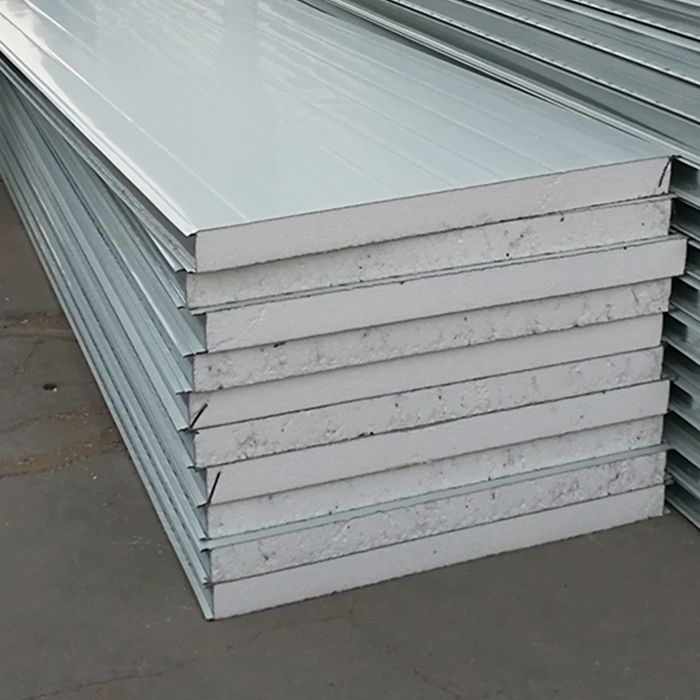
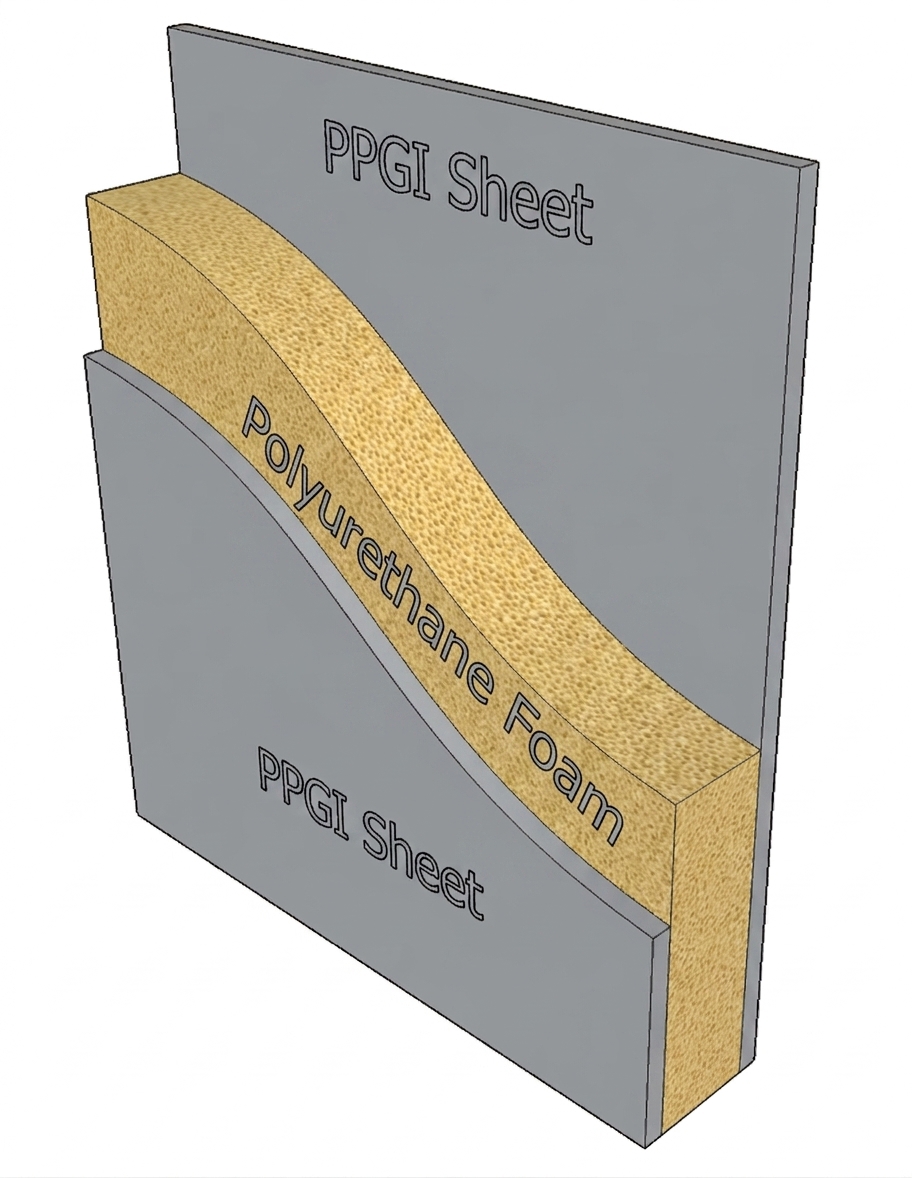
Sandwich Panel solve this problem by providing continuous insulation. The insulation core runs the full length and width of the panel without interruptions. There are no studs creating thermal bridges. The steel facings are bonded to the insulation core, but since the facings are thin and bonded across the full surface, they do not create the same kind of concentrated thermal bridges that structural studs do.
Research from the Oak Ridge National Laboratory has shown that continuous insulation systems provide 20 to 30 percent better thermal performance than framed wall systems with the same nominal R-value. The difference is entirely due to the elimination of thermal bridging.
Energy Performance by Panel Type
Not all Sandwich Panel perform equally when it comes to energy efficiency. The core material makes a significant difference in thermal performance:
EPS panel (0.035 to 0.040 W/mK): EPS provides good insulation at an affordable price. A 100mm EPS panel provides an R-value of approximately 2.5 to 2.9 m2K/W. EPS works well for buildings where energy costs are moderate and the budget is tight.
PU panel (0.022 to 0.028 W/mK): PU offers the best thermal performance of the three main core materials. A 100mm PU panel provides an R-value of approximately 3.6 to 4.5 m2K/W. That is roughly 50 to 60 percent better insulation than the same thickness of EPS. For buildings in extreme climates or where energy costs are high, PU panel deliver meaningful savings.
Rockwool panel (0.035 to 0.045 W/mK): Rockwool provides thermal performance similar to EPS but with the added benefit of fire resistance. The trade-off is weight. Rockwool panel are heavier, which can affect structural design and installation costs.
The practical difference is significant. A 5,000 square meter warehouse in a hot climate with PU panel instead of EPS could save 30 to 40 percent on cooling costs. Over a 20 year building life, those savings add up to many times the additional panel cost.
How Proper Insulation Reduces Costs by Up to 60 Percent
The 60 percent reduction figure comes from the combination of three factors working together:
Continuous insulation. Eliminating thermal bridging improves effective wall performance by 20 to 30 percent compared to framed construction.
Optimized thickness. Matching panel thickness to your climate zone and building use ensures you are not under insulated or over insulated. The right thickness delivers maximum energy savings without wasting money on unnecessary material.
Airtight construction. Sandwich Panel buildings with properly sealed joints are significantly more airtight than traditional construction. Air leakage accounts for 25 to 40 percent of heating and cooling energy loss in typical commercial buildings. Reducing air leakage through proper panel installation and joint sealing captures those savings.
When you combine continuous insulation, optimized thickness, and airtight construction, the total reduction in heating and cooling energy consumption can reach 50 to 60 percent compared to a conventionally built structure.
Lifecycle Cost Analysis
Some building owners focus on upfront panel cost and choose the cheapest option. This is almost always a mistake when you look at the full lifecycle picture. Here is why:
Consider two scenarios for a 3,000 square meter commercial building in a tropical climate:
Scenario A: EPS panel at 100mm. Lower panel cost, higher energy bills. Annual cooling cost approximately $18,000 per year.
Scenario B: PU panel at 80mm. Higher panel cost, lower energy bills. Annual cooling cost approximately $11,000 per year.
The PU panel might cost 15 to 20 percent more upfront. But the annual energy savings of $7,000 means the payback period is about 2 to 3 years. Over a 25 year building life, the total savings exceed $150,000. The panel paid for themselves many times over.
This calculation does not account for rising energy costs. If electricity prices increase by 3 to 5 percent per year, which is the historical trend in most markets, the actual savings over the building life are even higher.
It also does not account for HVAC equipment sizing. A better insulated building requires a smaller, less expensive cooling system. That is additional upfront savings on top of the ongoing energy savings.
Practical Tips for Maximizing Energy Savings
Getting the most energy performance from your Sandwich Panel requires attention to details beyond just selecting the right panel:
Seal every joint. The gaps between panel are the most common source of air leakage. Use compatible sealant and apply it consistently along every panel joint. Reinspect sealed joints after installation to catch any gaps before they become energy leaks.
Insulate roof and floor too. Walls are important, but the roof is often the biggest source of heat gain in a building. A well insulated roof panel prevents solar heat from entering the building. Floor insulation matters for cold storage and ground level commercial spaces.
Address openings carefully. Doors, windows, and penetrations for pipes and ducts are thermal bridges waiting to happen. Use insulated frames, thermal breaks, and proper sealing around every opening in the building envelope.
Consider orientation. South and west facing walls receive the most solar heat in most climates. These walls benefit from higher insulation values or reflective facing materials that reduce solar heat gain.
Getting Started
Reducing energy costs with proper insulation is one of the smartest investments a building owner can make. The panel you choose today will determine your energy bills for the next 25 to 40 years. Getting it right pays dividends. Getting it wrong costs you money every single day.
At RPS Construction, we manufacture EPS, PU, and Rockwool Sandwich Panel in Bangladesh. Our team can help you calculate the energy savings for your specific building, climate, and usage patterns. We help you select the right panel type and thickness to maximize lifecycle value.
Contact us to discuss your project and get a detailed energy performance comparison for different panel options.