Pipe insulation is one of those building components that goes unnoticed until something goes wrong. A pipe that sweats and drips water onto a finished ceiling, an energy bill that is higher than it should be, or a burn injury from touching a hot pipe are all signs that insulation was missing, inadequate, or incorrectly installed.
This guide covers why pipe insulation matters, the materials available, and how to choose the right option for your application.
Why Pipe Insulation Matters
Pipe insulation serves three primary purposes, and each one has a direct impact on your building and your budget.
Energy savings. Hot water pipes lose heat to the surrounding air. Cold water pipes gain heat from the surrounding air. Both situations mean your heating or cooling system works harder than necessary. Proper pipe insulation reduces heat loss or gain by 80 to 90 percent, which translates directly into lower energy bills.
Condensation prevention. When cold water pipes run through warm, humid air, moisture condenses on the pipe surface. This water drips onto ceilings, walls, and equipment, causing water damage, mold growth, and corrosion. Insulation keeps the pipe surface temperature above the dew point, preventing condensation from forming.
Personnel protection. Hot water and steam pipes can cause burns on contact. Building codes typically require that any pipe surface above 60 degrees Celsius in occupied areas must be insulated to prevent injury. This is especially important in schools, hospitals, and commercial buildings where people move through mechanical spaces.
Comparing Pipe Insulation Materials
Three main materials are used for pipe insulation in Bangladesh. Each has strengths and limitations that make it suitable for different applications.
EPS Pipe Sections
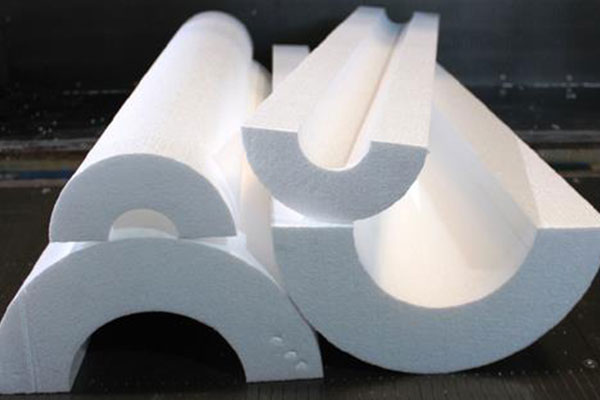
EPS pipe sections are made from expanded polystyrene, formed into half-shell shapes that snap around the pipe. They are the most affordable option and work well for low-temperature applications.
- Temperature range: Up to 70 degrees Celsius
- Thermal conductivity: 0.035 to 0.040 W/mK
- Best for: Cold water lines, HVAC chilled water, low-temperature applications
- Limitation: Not suitable for high-temperature steam or hot water systems
PU / PUF Pipe Sections
PU pipe sections use closed-cell polyurethane foam. They offer the best thermal performance of the three materials and are the standard choice for most commercial and industrial pipe insulation.
- Temperature range: Up to 110 degrees Celsius
- Thermal conductivity: 0.022 to 0.025 W/mK
- Best for: Hot water systems, chilled water lines, refrigeration piping, HVAC systems
- Limitation: Higher cost than EPS, and the closed-cell structure can be damaged by UV exposure if not properly jacketed
Rockwool Pipe Sections
Rockwool pipe sections are made from mineral wool formed into half-shell shapes. They provide excellent fire resistance and are the only option suitable for high-temperature applications.
- Temperature range: Up to 650 degrees Celsius
- Thermal conductivity: 0.040 to 0.045 W/mK
- Best for: Steam pipes, high-temperature process piping, fire-rated applications, industrial facilities
- Limitation: Heaviest of the three materials, and requires an outer jacket or cladding for moisture protection
Choosing by Temperature Range
The operating temperature of the pipe is the most important factor when selecting insulation material:
| Application | Typical Temp | Recommended Material |
|---|---|---|
| Cold water supply | 5 to 15C | EPS or PU |
| HVAC chilled water | 2 to 10C | PU (best moisture resistance) |
| Domestic hot water | 45 to 65C | PU |
| Central heating hot water | 70 to 95C | PU or Rockwool |
| Steam pipes | 100 to 250C | Rockwool |
| High-temp process piping | 250 to 650C | Rockwool with aluminum cladding |
Pipe Diameters and Sizing
Pipe insulation sections are manufactured to fit standard pipe diameters. Common sizes range from 15mm for small water lines up to 300mm or more for large industrial pipes. The insulation thickness is selected based on the temperature differential and the desired energy savings.
For most commercial applications, insulation thickness ranges from 19mm to 50mm. Industrial applications with high-temperature steam may require insulation thickness of 75mm to 100mm or more.
When ordering pipe insulation, you need two pieces of information: the outside diameter of the pipe and the insulation thickness required. The pipe section is manufactured with an internal diameter that matches the pipe's outside diameter, and the insulation thickness is measured from the pipe surface to the outer face of the insulation.
Common Applications
HVAC systems. Chilled water and hot water piping in air conditioning systems are the most common application for pipe insulation. Proper insulation prevents condensation on chilled water lines and reduces heat loss on hot water lines, both of which improve system efficiency.
Industrial facilities. Process piping in factories, refineries, and power plants carries fluids at a wide range of temperatures. Steam lines, hot oil systems, and chemical process piping all require insulation matched to the operating conditions.
Plumbing systems. Hot water pipes in commercial buildings and residential complexes benefit from insulation that reduces heat loss and prevents burns. Cold water pipes in humid environments need insulation to prevent condensation.
Cold storage facilities. Refrigerant piping and chilled water lines in cold rooms and freezer facilities must be insulated to prevent condensation and maintain system efficiency.
Installation Considerations
Proper installation is as important as choosing the right material. Here are the key points:
Joint sealing. Every joint between insulation sections must be sealed with adhesive. Gaps at joints allow air infiltration, which causes condensation and reduces insulation performance. Use the manufacturer's recommended adhesive for the best bond.
Outer jacketing. EPS and PU pipe sections used outdoors or in humid environments should be covered with an aluminum or PVC jacket to protect the insulation from moisture, UV damage, and mechanical damage. Rockwool sections always require an outer jacket because the material is not inherently moisture resistant.
Support points. Pipe hangers and supports create thermal bridges that bypass the insulation. Use insulation saddles or pipe shields at support points to maintain continuous insulation around the pipe.
Valves and fittings. Valves, flanges, and fittings need removable insulation covers that allow maintenance access while providing insulation when the cover is in place. Leaving these components uninsulated creates significant heat loss points.
Expansion joints. Long runs of pipe need expansion loops or offsets to accommodate thermal movement. The insulation at these points must allow the pipe to move without compressing or dislodging the insulation.
Getting Started
Choosing the right pipe insulation starts with understanding your system. What is the pipe diameter? What temperature does the fluid reach? Is the pipe in a controlled environment or exposed to weather? Does the installation require fire-rated insulation?
At RPS Construction, we manufacture EPS, PU, and Rockwool pipe insulation sections in Bangladesh. Our products come in standard diameters from 15mm to 300mm with insulation thicknesses from 19mm to 100mm. We can also produce custom sizes for non-standard applications.
Contact us with your pipe schedule and operating conditions, and we will recommend the right insulation specification and provide a quote.