PU or polyurethane insulation is one of the most widely used insulation materials in industrial and commercial construction. It appears in cold storage facilities, warehouse walls, roofing systems, pipe insulation, and countless other applications. But what makes PU insulation so popular, and how does it compare to other options on the market?
In this guide, we will cover everything you need to know about PU insulation. We will explain how it works, compare it to other insulation materials, and help you understand when PU is the right choice for your project.
What is PU Insulation
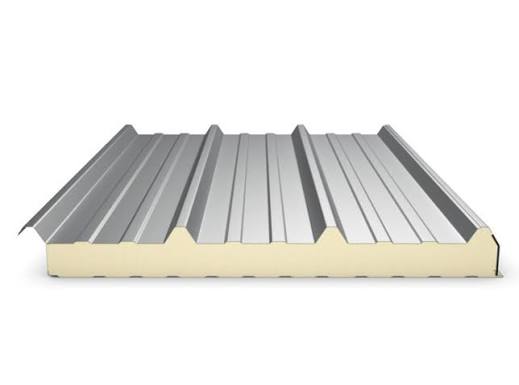
PU insulation is a rigid foam material made by mixing two liquid chemicals, polyol and isocyanate. When these chemicals combine, they react and expand, forming a foam that hardens into a solid structure. The resulting material consists of millions of tiny closed cells filled with an insulating gas that gives the foam its thermal properties.
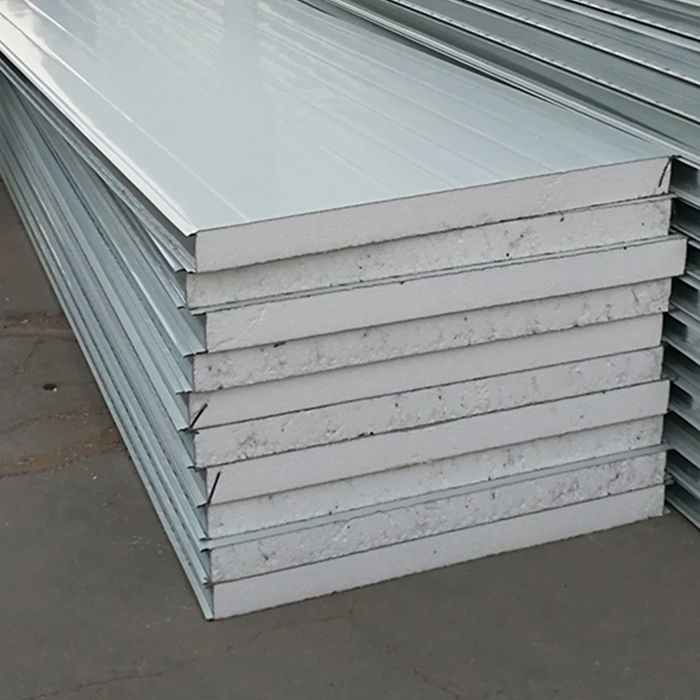
PU insulation is manufactured in several forms. Rigid boards and panel are used for building walls, roofs, and cold rooms. Spray applied foam is used for insulating irregular surfaces and retrofitting existing buildings. Pipe sections and shells are made for insulating hot and cold water pipes. Each form serves a specific purpose, but the underlying material properties are the same.
The closed cell structure is what sets PU apart from many other insulation materials. Each cell is a tiny pocket of gas trapped within the foam matrix. These cells are typically 95 percent or more closed, meaning they do not interconnect. This structure traps the insulating gas inside the cells and keeps moisture out, which is why PU performs so well in cold and humid environments.
Thermal Conductivity and Performance
Thermal conductivity, measured in W/mK, tells you how well a material conducts heat. A lower number means better insulation. PU insulation has one of the lowest thermal conductivity values of any commonly available insulation material.
PU insulation: 0.020 to 0.028 W/mK depending on density and formulation
For comparison, here are the typical thermal conductivity values for other common insulation materials.
- EPS (Expanded Polystyrene): 0.032 to 0.040 W/mK
- XPS (Extruded Polystyrene): 0.028 to 0.036 W/mK
- Rockwool (Mineral Wool): 0.035 to 0.045 W/mK
- Fiberglass: 0.032 to 0.040 W/mK
- Aerogel: 0.013 to 0.020 W/mK
PU insulation performs roughly 30 to 50 percent better than EPS and Rockwool on a per millimeter basis. This means you can use thinner PU panel to achieve the same insulation value as thicker panel made from other materials. In applications where space is limited, this advantage becomes significant.
R Value Comparisons
R value measures thermal resistance. It is the inverse of U value, which measures thermal transmittance. Higher R value means better insulation. R value is calculated by dividing the material thickness by its thermal conductivity.
Here is how different materials compare at common thicknesses.
50 Millimeter Thickness
- PU foam (0.022 W/mK): R value of 2.27
- EPS (0.035 W/mK): R value of 1.43
- Rockwool (0.038 W/mK): R value of 1.32
- Fiberglass (0.035 W/mK): R value of 1.43
100 Millimeter Thickness
- PU foam (0.022 W/mK): R value of 4.55
- EPS (0.035 W/mK): R value of 2.86
- Rockwool (0.038 W/mK): R value of 2.63
- Fiberglass (0.035 W/mK): R value of 2.86
150 Millimeter Thickness
- PU foam (0.022 W/mK): R value of 6.82
- EPS (0.035 W/mK): R value of 4.29
- Rockwool (0.038 W/mK): R value of 3.95
- Fiberglass (0.035 W/mK): R value of 4.29
At every thickness, PU provides significantly higher R value than the alternatives. For a cold storage facility, this means using 100 millimeter PU panel instead of 100 millimeter EPS panel gives you 59 percent better insulation performance without any increase in wall thickness.
Closed Cell Structure and Moisture Resistance
The closed cell structure of PU insulation is one of its most important properties. Because the cells are sealed and do not interconnect, water cannot easily penetrate the foam. PU insulation typically absorbs less than 2 percent water by volume, compared to 10 to 30 percent for open cell materials like fiberglass and some types of Rockwool.
This moisture resistance matters in several ways. In cold storage applications, moisture in the insulation reduces thermal performance and can cause the foam to degrade over time. In building applications, moisture accumulation in walls leads to mold, rot, and structural damage. PU insulation avoids these problems by keeping moisture out of the insulation layer.
The moisture resistance also makes PU suitable for underground and below grade applications where other insulation materials might fail. Foundation insulation, basement walls, and underground pipe insulation all benefit from PU's ability to resist water penetration.
Fire Ratings and Safety
Fire performance is an important consideration for any insulation material. PU insulation is classified as a combustible material, which means it will burn when exposed to an open flame. However, modern PU formulations include fire retardant additives that significantly improve their fire performance.
PU panel are typically available in several fire rating classes. The most common classification system is the European reaction to fire classification, which ranges from F (easiest to ignite) to A1 (non combustible).
Standard PU panel typically achieve a B2 or B1 classification, meaning they are difficult to ignite and have limited flame spread. When used in Sandwich Panel with steel facings, the steel provides additional fire protection by shielding the foam core from direct flame exposure.
PIR (Polyisocyanurate) panel offer improved fire performance over standard PU. PIR foam chars rather than melting when exposed to flame, which creates a protective carbon layer that slows fire spread. PIR panel typically achieve B1 classification without additional fire retardants.
For applications where non combustible materials are required, Rockwool insulation is the better choice. Rockwool panel achieve A1 classification, meaning they do not burn at all. However, Rockwool provides less insulation per unit thickness than PU, so there is a trade off between fire performance and thermal performance.
Applications in Cold Storage
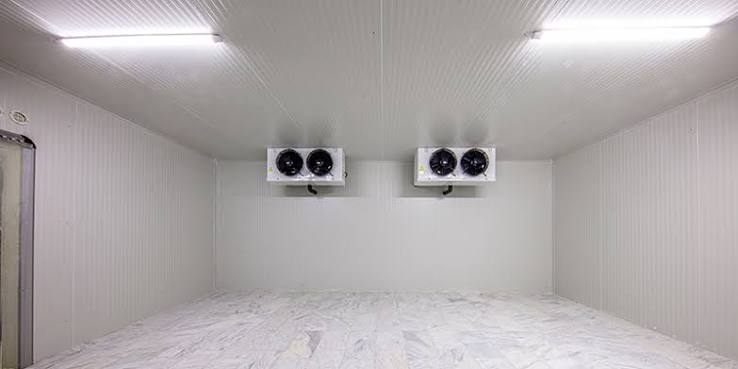
Cold storage is one of the largest markets for PU insulation. The combination of excellent thermal performance and moisture resistance makes PU the natural choice for freezer rooms, chiller rooms, and refrigerated warehouses.
In a typical cold storage facility, PU Sandwich Panel form the walls, ceiling, and sometimes the floor. The panel consist of two steel facings with a PU foam core bonded between them. The steel provides structural strength and creates smooth, easy to clean interior surfaces. The PU core provides the thermal insulation that keeps the cold in and the heat out.
The thickness of the PU core depends on the temperature requirement. Chiller rooms operating at 2 to 8 degrees Celsius typically use 50 to 75 millimeter panel. Standard freezer rooms at minus 18 to minus 25 degrees Celsius use 100 to 150 millimeter panel. Deep freeze rooms at minus 30 degrees or below may use 150 to 200 millimeter panel.
Applications in Building Construction
Beyond cold storage, PU insulation is widely used in general building construction. It appears in wall panel, roofing systems, and retrofit projects where high performance insulation is needed.
Wall panel. PU insulated wall panel provide both structure and insulation in a single component. They are used in warehouses, factories, commercial buildings, and even residential construction. The combination of high insulation value and thin profile makes them attractive for buildings where interior space is at a premium.
Roofing systems. Insulated roof panel with PU cores provide thermal protection from above. They are commonly used on warehouses, cold storage facilities, and commercial buildings. The roof is typically the largest source of heat gain in a building, so high performance roof insulation has a major impact on energy costs.
Retrofit projects. Spray applied PU foam is used to insulate existing buildings that were built without adequate insulation. The spray foam can be applied to the interior or exterior of walls, roofs, and foundations, filling gaps and creating a continuous insulation layer that eliminates thermal bridging.
Industrial Applications
Industrial processes often generate or require specific temperature conditions. PU insulation helps maintain these conditions while reducing energy costs.
Pipe insulation. Hot and cold water pipes, steam pipes, and refrigerant lines all benefit from PU insulation. PU pipe sections and shells fit around pipes and are secured with adhesive or mechanical fasteners. The insulation reduces heat loss from hot pipes and prevents condensation on cold pipes.
Tank insulation. Storage tanks for temperature sensitive liquids, including fuel oil, chemicals, and food products, use PU insulation to maintain product temperature and prevent freezing or overheating.
Industrial ovens and furnaces. High temperature PU formulations are used to insulate industrial ovens, furnaces, and heat processing equipment. These specialized formulations can withstand continuous operating temperatures of 120 to 150 degrees Celsius.
PU vs Other Insulation Materials
Choosing the right insulation material depends on several factors. Here is how PU compares to the most common alternatives.
PU vs EPS. PU provides about 40 percent better insulation per unit thickness than EPS. EPS is less expensive per square foot but requires thicker panel to achieve the same thermal performance. For applications where wall thickness matters or where the temperature difference is large, PU is the better choice. For budget sensitive projects with moderate insulation requirements, EPS can work well.
PU vs Rockwool. PU provides better insulation than Rockwool and is much lighter. Rockwool provides superior fire resistance and acoustic performance. The choice between them depends on whether thermal performance or fire safety is the primary concern. Many buildings use both, with Rockwool in areas requiring fire separation and PU in areas where thermal performance is the priority.
PU vs Fiberglass. PU provides significantly better insulation and moisture resistance than fiberglass. Fiberglass is less expensive but is an open cell material that absorbs moisture and loses insulation value when wet. In cold storage and high humidity environments, PU is almost always the better choice.
PU vs Aerogel. Aerogel provides the best insulation performance of any commercially available material, with thermal conductivity as low as 0.013 W/mK. However, aerogel is extremely expensive, typically 10 to 20 times the cost of PU. It is used only in specialized applications where the absolute minimum thickness is required.
Choosing the Right PU Product
PU insulation comes in many forms, and choosing the right one depends on your application.
For cold storage walls and ceilings: PU Sandwich Panel with steel facings. These provide insulation, structure, and interior finish in a single component. Choose the panel thickness based on your temperature requirements.
For pipe insulation: Pre-formed PU pipe sections and shells. These come in standard pipe sizes and can be cut to length on site.
For retrofit insulation: Spray applied PU foam. This can conform to irregular surfaces and fill gaps that rigid boards cannot reach.
For roofing: Insulated roof panel with PU or PIR cores. These span between structural supports and provide both insulation and weather protection.
Getting Started
Understanding your insulation requirements is the first step. What temperatures do you need to maintain? What is the building geometry? What are the local fire code requirements? What is your budget?
At RPS Construction, we manufacture PU Sandwich Panel for a wide range of industrial and commercial applications across Bangladesh. Our panel provide excellent thermal performance and moisture resistance for cold storage, building, and industrial projects. We handle everything from manufacturing to professional installation.
Contact us today to discuss your insulation needs and get a free quotation.