If you are planning a construction project in Bangladesh and looking at Sandwich Panel, one of the first questions you will ask is how much they cost. The answer depends on several factors, and understanding them will help you budget accurately and avoid surprises.
This guide covers the typical price ranges for each panel type, the factors that push prices up or down, and why focusing only on panel price can lead to poor decisions.
Current Price Ranges in Bangladesh
For a standard 50mm Sandwich Panel with pre-painted galvanized steel (PPGI) facing, here are the typical price ranges you can expect in the Bangladeshi market in 2026:
| Panel Type | 50mm (BDT/sqm) | 75mm (BDT/sqm) | 100mm (BDT/sqm) |
|---|---|---|---|
| EPS | 800 to 1,200 | 1,000 to 1,500 | 1,200 to 1,800 |
| PU / PUF | 1,500 to 2,500 | 2,000 to 3,200 | 2,500 to 3,800 |
| Rockwool | 1,800 to 2,800 | 2,300 to 3,500 | 2,800 to 4,200 |
These prices are for the panel alone. They do not include fasteners, sealants, flashings, or installation labor. Always request a complete quote that includes all materials and installation to compare true costs between suppliers.
Factors That Affect Panel Price
Several variables influence the final price of Sandwich Panel. Understanding these helps you make informed decisions and avoid paying for features you do not need.
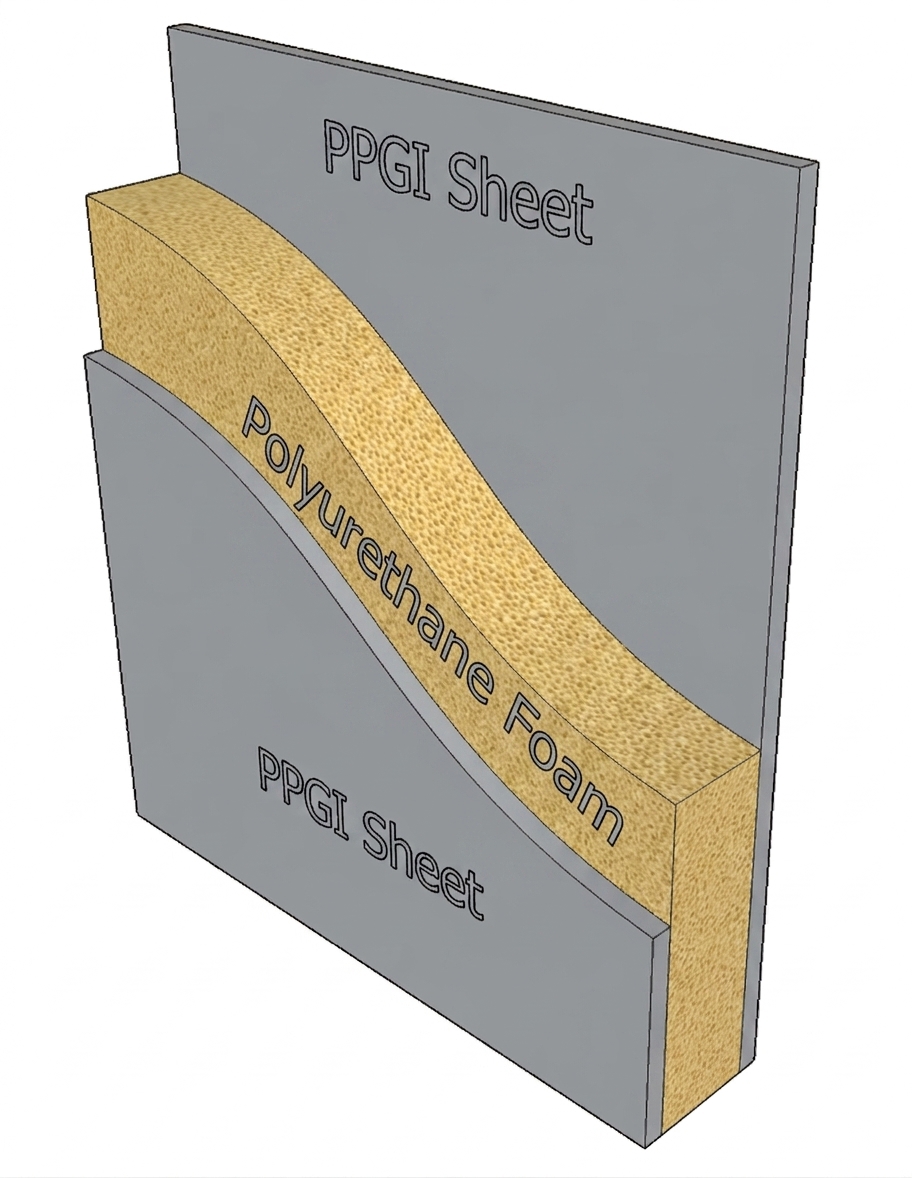
Core material. This is the biggest price driver. EPS is the cheapest because the raw material is inexpensive and the manufacturing process is simple. PU costs more because the polyurethane foam itself is a higher performance material. Rockwool is typically the most expensive due to the energy-intensive manufacturing process and the raw basalt material.
Panel thickness. Thicker panel cost more per square meter, but the relationship is not linear. A 100mm panel does not cost exactly twice as much as a 50mm panel. The steel facing remains the same, so the additional cost is primarily the extra core material.
Steel facing. The standard facing is 0.35mm to 0.50mm PPGI steel. Thicker steel, different colors, or special coatings like anti-bacterial or food-grade finishes will increase the price. Aluminum facings are also available but cost significantly more than steel.
Quantity. Volume matters. Most suppliers offer better rates for larger orders. A project that requires 5,000 square meters of panel will typically get a lower per-square-meter rate than one that needs 200 square meters.
Joint type. Cam-lock panel cost more than tongue-and-groove panel because of the mechanical locking system built into the edges. The additional cost is usually justified by faster installation and better joint performance.
Total Installed Cost vs Panel Price
Focusing only on panel price is a common mistake that can lead to higher total project costs. Here is a more realistic picture of what a Sandwich Panel project actually costs when you factor in everything:
- Panel supply: 55 to 65 percent of total cost
- Fasteners and accessories: 5 to 10 percent
- Installation labor: 15 to 25 percent
- Flashings and trim: 5 to 10 percent
- Transport and handling: 3 to 5 percent
A supplier offering cheaper panel but substandard fasteners or no installation support may actually cost more when the project is complete. Ask for a total installed price, not just a panel price, when comparing suppliers.
Why the Cheapest Panel is Not Always Best
It is tempting to choose the lowest price, but cheap panel can cost more in the long run. Here is how:
Higher energy bills. A cheaper panel with lower insulation performance means your cooling or heating system works harder. Over five to ten years, the extra electricity cost can easily exceed the initial savings on panel price.
Shorter lifespan. Lower quality panel may have inconsistent core density, poor bonding between the core and facing, or thinner steel. These issues lead to delamination, corrosion, and reduced performance over time.
Maintenance costs. Panel that deteriorate quickly need repair or replacement sooner. The cost of shutting down a facility to replace wall panel is far more than the difference between a good panel and a cheap one.
Code compliance. Some projects, particularly garment factories and commercial buildings, have mandatory fire code requirements. A cheap EPS panel may not meet these requirements, forcing you to rip it out and replace it with a compliant material.
Getting Accurate Pricing
The best way to get accurate pricing for your project is to request a detailed quote based on your specific requirements. A proper quote should include:
- Panel type, core material, and thickness
- Steel facing specification and color
- Quantity in square meters
- Joint type and profile
- All fasteners, sealants, and accessories
- Installation labor and timeline
- Transport and delivery costs
- Payment terms and warranty
At RPS Construction, we provide transparent, detailed quotes that cover every aspect of your Sandwich Panel project. We manufacture EPS, PU, and Rockwool panel in our own facility, which means you get factory direct pricing without middleman markups.
Contact us with your project details and we will provide a complete quote within 48 hours.