Modern buildings face a set of demands that did not exist a generation ago. Occupants expect comfortable indoor temperatures year round. Building owners want lower energy costs. Architects demand clean aesthetics and design flexibility. Regulators enforce stricter fire codes and energy performance standards. And everyone wants the building finished as quickly as possible.
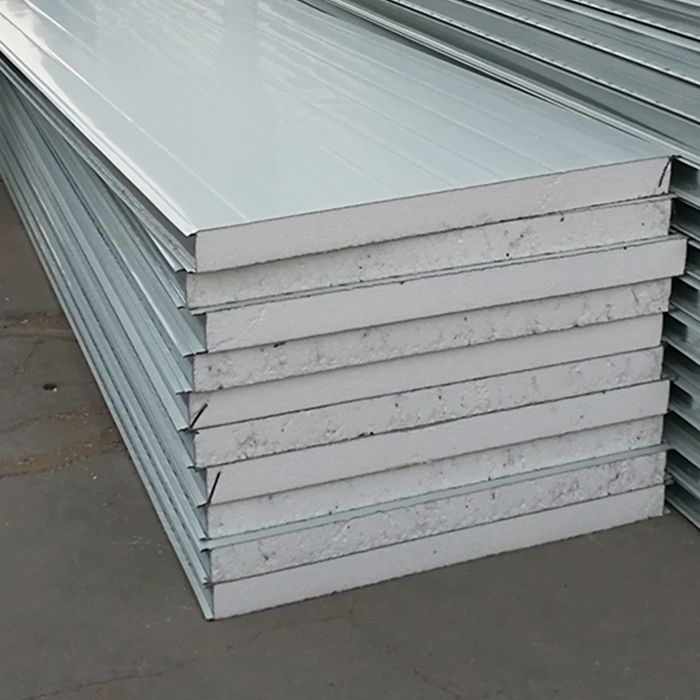
Sandwich Panel address all of these requirements in a single building component. They are not just an insulation product or a cladding material. They are a complete building system that handles thermal performance, structural loads, weather protection, and architectural finishing in one factory made unit.
In this article, we will explain how Sandwich Panel solve the key challenges of modern construction, compare them against traditional building methods, and show how they have been applied in real projects across Bangladesh.
Thermal Insulation That Actually Works
Bangladesh has a hot and humid climate for most of the year. Summer temperatures regularly climb above 35 degrees Celsius, and humidity levels stay above 70 percent for months at a time. Buildings that are not properly insulated end up requiring massive amounts of air conditioning to keep occupants comfortable, which drives energy costs through the roof.
Sandwich Panel solve this problem through their continuous insulation core. Unlike traditional wall systems where insulation is installed between studs with gaps and thermal bridges, a Sandwich Panel provides an unbroken layer of insulation from one edge of the panel to the other. There are no studs punching through the insulation, no gaps where air can leak, and no thermal bridges that allow heat to bypass the insulation.
The thermal performance varies by core material. EPS panel provide a thermal conductivity of 0.035 to 0.040 W/mK. PU panel perform better at 0.022 W/mK, meaning a 50mm PU panel delivers the same insulation value as a 100mm EPS panel. Rockwool panel fall in between at 0.035 to 0.040 W/mK, but they add fire resistance that the other cores cannot match.
In practical terms, a building clad with 75mm PU Sandwich Panel can reduce cooling energy costs by 30 to 40 percent compared to a building built with conventional concrete block walls and separate insulation. For a commercial building in Dhaka where electricity costs are a significant operating expense, that reduction pays for the panel premium within the first two to three years of operation.
Structural Integrity Built into Every Panel
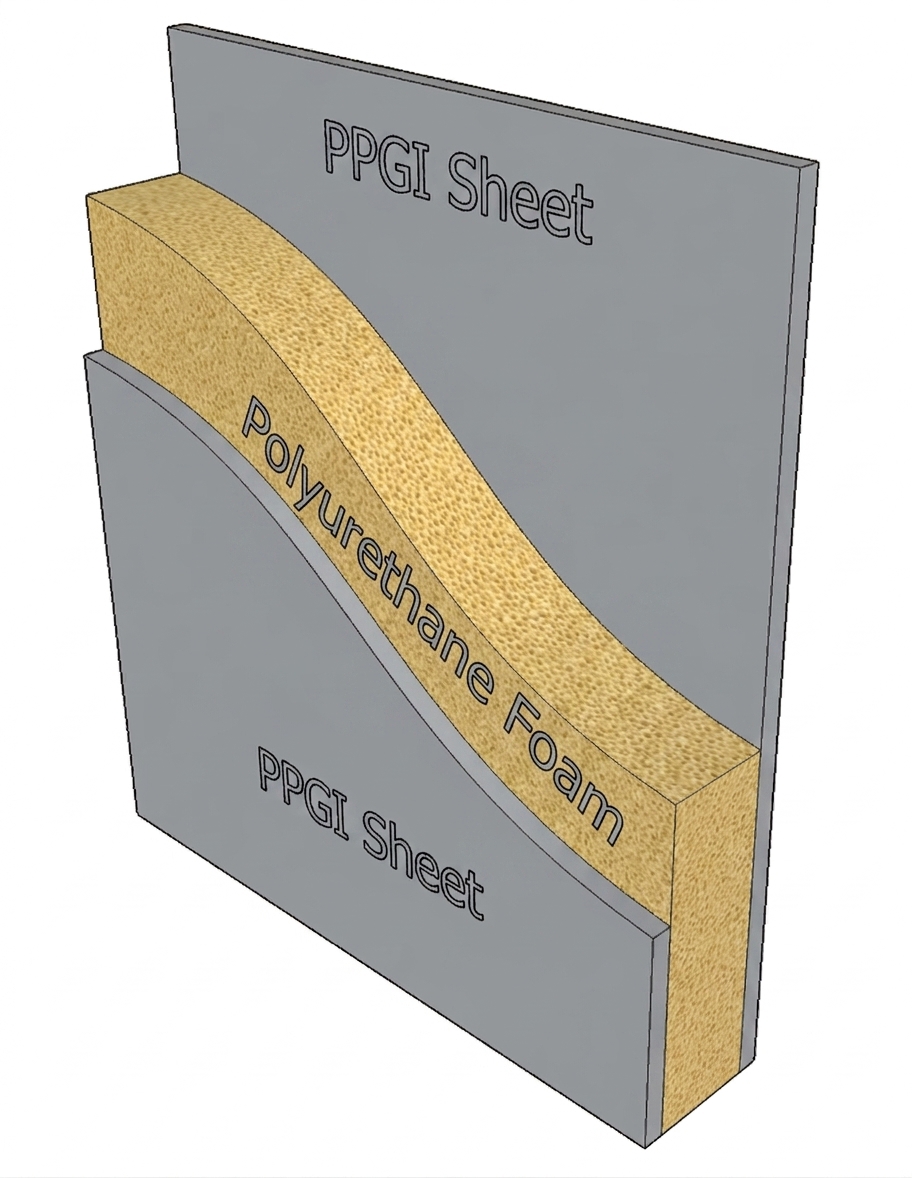
A common misconception about Sandwich Panel is that they are just insulation with a metal skin. In reality, the three layer construction creates a structural component that can span significant distances without additional framing.
The steel facings act like the flanges of an I beam. They carry the tension and compression forces that result from wind loads and other external pressures. The insulation core acts like the web, transferring shear forces between the two facings and preventing them from buckling. This composite action gives the panel much more strength than the sum of its parts.
In building applications, this structural capacity means that Sandwich Panel can span from floor to roof without intermediate supports. For single story warehouses and factories, this eliminates the need for interior columns in many cases, creating open floor plans that are more flexible and useful.
For multi story buildings, Sandwich Panel work as cladding attached to a structural frame of steel or concrete. The panel carries its own weight and wind loads, transferring these forces to the frame through engineered connections. This reduces the load on the primary structure, which can lead to lighter and more economical framing.
The structural performance also depends on panel thickness and facing gauge. Thicker panel with heavier gauge steel facings handle higher loads and longer spans. A structural engineer can specify the right combination based on the wind loads, building height, and span requirements of your specific project.
Weather Resistance for Bangladesh Climate
Bangladesh experiences some of the most challenging weather conditions in South Asia. The monsoon season brings heavy rainfall for four to five months. Cyclones can produce wind speeds above 150 kilometers per hour. High humidity creates constant moisture pressure on building envelopes. And the intense summer sun degrades materials that are not UV resistant.
Sandwich Panel handle all of these conditions well. The steel facings are coated with protective paint systems that resist corrosion, UV degradation, and moisture damage. The panel joints use sealed connections with gaskets and sealants that prevent water infiltration even under driving rain conditions.
The closed cell structure of PU foam cores provides inherent moisture resistance. Unlike open cell insulation materials that can absorb water and lose their thermal performance, PU panel maintain their insulation value even in constantly humid environments. This is particularly important for buildings in coastal areas of Bangladesh where salt air and humidity create aggressive conditions for building materials.
For cyclone prone regions, Sandwich Panel with reinforced connections and heavier gauge facings can be specified to withstand the wind loads required by local building codes. The interlocking joint system of modern Sandwich Panel creates a continuous building envelope that resists wind pressure and water penetration simultaneously.
Aesthetic Options and Design Flexibility
Gone are the days when Sandwich Panel meant a plain, industrial looking building. Modern panel systems offer a range of surface profiles, colors, and finishing options that give architects significant design freedom.
Standard panel profiles include smooth flat finishes, ribbed profiles with different rib heights and spacings, and micro ribbed profiles that create subtle texture on the building surface. Each profile creates a different visual character, from the clean minimalism of a flat panel to the industrial rhythm of a ribbed surface.
Color options range from standard RAL colors to custom matched shades that complement a brand identity or architectural concept. The paint finish itself can be polyester, SMP, or PVDF, each offering different levels of durability and gloss retention. For buildings where long term appearance matters, PVDF finishes maintain their color and gloss for 20 years or more.
For projects that want the warmth of natural materials without the maintenance burden, some manufacturers offer panel with printed or laminated finishes that replicate the appearance of wood, stone, or brick. These decorative panel use the same structural and thermal performance as standard Sandwich Panel but add an aesthetic layer that expands design possibilities.
Corner details, window and door openings, and transition zones between different panel types are handled through purpose made accessories and flashing systems. These components ensure that the building envelope remains continuous and weather tight at every junction, while maintaining the clean lines that architects expect.
Speed of Construction Changes Everything
In traditional construction, building a wall involves multiple sequential steps. You pour a foundation, erect a structural frame, install blockwork or brickwork, apply insulation, add a vapor barrier, install sheathing, and finish with cladding or plaster. Each step requires different materials, different tradespeople, and different equipment. And each step must be completed before the next one can begin.
Sandwich Panel collapse most of these steps into a single operation. The panel arrives at site as a complete wall system with structural capacity, insulation, weather protection, and finished surface all in one unit. Installation requires cutting the panel to size, lifting it into position, and securing it to the frame. The wall is done.
The speed difference is dramatic. A typical warehouse project that takes 12 to 16 weeks to complete using traditional masonry construction can be finished in 6 to 8 weeks using Sandwich Panel. For commercial buildings where every week of construction represents lost revenue from delayed occupancy, this time saving has real financial value.
In Bangladesh, where the construction season is limited by the monsoon, speed of construction is particularly valuable. Projects that can be completed before the monsoon season starts avoid the delays and quality issues that wet weather brings to traditional construction. Sandwich Panel allow builders to dry in a building quickly, protecting the interior work from rain damage and keeping the project on schedule.
Cost Savings Across the Building Lifecycle
The cost conversation around Sandwich Panel often focuses on the panel price per square meter compared to traditional materials. But this comparison misses the bigger picture. The real cost advantage of Sandwich Panel shows up when you look at the total project cost and the ongoing operating costs over the life of the building.
Reduced labor costs. Because Sandwich Panel install faster and require fewer trades, the total labor cost for wall construction is typically 20 to 30 percent lower than traditional methods. In Bangladesh where skilled labor is increasingly expensive and sometimes difficult to source, this is a significant advantage.
Lower foundation costs. Sandwich Panel weigh less than masonry walls. A 75mm Sandwich Panel weighs approximately 12 to 15 kilograms per square meter, compared to 100 to 200 kilograms per square meter for a concrete block wall with plaster. This reduced weight means smaller foundations, which saves money at the very start of the project.
Energy savings. As we discussed in the thermal insulation section, Sandwich Panel reduce cooling energy costs by 30 to 40 percent compared to uninsulated traditional walls. Over a 20 year building life, these energy savings can exceed the entire cost of the wall system.
Minimal maintenance. Steel faced Sandwich Panel do not need painting, plastering, or moisture treatment. They resist impacts, do not crack, and maintain their appearance and performance for decades. The maintenance cost for Sandwich Panel walls is a fraction of what traditional finishes require.
Case Studies from Bangladesh
Sandwich Panel have been used in a growing number of projects across Bangladesh, demonstrating their versatility across different building types and applications.
Industrial Warehouses in Gazipur
Several garment factory warehouses in the Gazipur industrial zone have switched from traditional brick construction to Sandwich Panel cladding. The primary motivation was speed. These warehouses needed to be operational before the export season, and traditional construction could not meet the timeline. Sandwich Panel cladding allowed the buildings to be dry walled in half the time, with better thermal performance that reduced air conditioning costs in the finished buildings.
Cold Storage Facilities in Dhaka
Cold storage operators in Dhaka have adopted PU Sandwich Panel as the standard construction material for new facilities. The superior thermal performance of PU panel maintains consistent temperatures with less refrigeration energy, and the moisture resistance of the closed cell foam prevents the condensation problems that plague cold rooms built with traditional insulation methods.
Commercial Buildings in Chittagong
Commercial and mixed use buildings in Chittagong have begun using Sandwich Panel for interior partitions and external cladding. The corrosion resistance of coated steel facings makes Sandwich Panel particularly attractive in Chittagong's coastal environment, where salt air rapidly deteriorates exposed building materials.
Environmental Benefits of Sandwich Panel
Sustainability is no longer a niche concern. Building owners, tenants, and regulators increasingly expect construction materials to have a lower environmental impact. Sandwich Panel contribute to sustainability in several ways.
The reduced energy consumption from better insulation directly lowers the carbon footprint of the building over its operational life. Studies show that the energy saved by Sandwich Panel insulation within the first five to seven years of operation more than offsets the energy used to manufacture the panel.
Steel facings are fully recyclable at the end of the building's life. Unlike concrete or masonry that becomes demolition waste, steel can be melted down and reused indefinitely. EPS cores can also be recycled in facilities that process polystyrene waste.
The speed of construction reduces the environmental impact of the building process itself. Fewer delivery trucks, less on site waste, and reduced construction time all contribute to a smaller project footprint compared to traditional methods.
Choosing the Right Sandwich Panel System
Selecting the right Sandwich Panel system for your building starts with understanding the primary requirements. Here are the key questions to answer before making a decision.
What is the building type and use? Warehouses and factories have different requirements than offices or residential buildings. The building use determines the thermal, acoustic, and fire performance levels needed.
What are the local code requirements? Bangladesh National Building Code sets minimum standards for fire resistance, structural capacity, and energy performance. Your panel specification must meet or exceed these requirements.
What is the budget? EPS panel offer the lowest cost, PU panel provide the best thermal performance per millimeter, and Rockwool panel deliver fire resistance. The right choice balances performance requirements with budget constraints.
What is the timeline? If speed of construction is the priority, Sandwich Panel with integrated finishes that eliminate the need for secondary cladding will get you to occupancy fastest.
Working with RPS Construction
At RPS Construction, we manufacture and install EPS, PU, and Rockwool Sandwich Panel for buildings of all types across Bangladesh. Our team understands the local climate, building codes, and construction practices, and we can help you select the panel system that delivers the best value for your specific project.
We handle everything from initial consultation and specification through manufacturing, delivery, and professional installation. Our projects include warehouses, cold storage facilities, commercial buildings, factories, and institutional buildings throughout the country.
Whether you are planning a new construction project or evaluating Sandwich Panel as an upgrade to your existing building approach, contact us for a free consultation and project quote.